
Read the crack before you read the quote
A crack in a ceiling describes a symptom, not a diagnosis. A fine, meandering line sitting in the paint behaves differently from a straight crack tracking a sheet joint, and both differ from one running along a tray or cornice junction. Width matters, but so does direction: a crack that follows a joint usually points to movement or a joint detail that was never properly supported, while a random surface line often sits only in the coating.
Whether the crack has changed is the next question. A crack that has sat unchanged for years rarely carries the same urgency as one that has widened, lengthened or begun to shed powder. Photographs taken months apart are more useful than a single close-up, and a whole-room image shows where the crack sits relative to downlights, bulkheads and external walls.
Look above the ceiling before opening the surface
Cracks and stains often share a cause. Roof flashing, a leaking fitting, a wet area on the floor above, or condensation in a poorly ventilated ceiling space can all push moisture into lining and framing. Where staining, softness or a musty smell is present, the source needs identifying and correcting before the surface is patched and repainted.
Older Brisbane homes may also contain materials that should be assessed by a suitably qualified professional before any cutting or removal. A plastering scope should state how concealed damage and uncertain materials will be handled rather than assuming the ceiling is straightforward.
Where the crack sits usually decides the method
A crack along a sheet joint calls for the joint itself to be examined; a crack at a wall-to-ceiling junction may need that junction re-detailed; a crack circling a downlight or service cutout often reflects vibration or a poorly supported opening. Each has a different repair, and a single patch-and-repaint line item cannot cover all three honestly.
Tray ceilings and bulkheads introduce further junctions, and those are where movement shows first. Where a ceiling meets a bulkhead or a change in height, the detail — backing, bead and joint treatment — usually matters more than the compound used to finish it.
Why a simple patch sometimes comes back
Patching a crack without addressing its cause is the most common reason a repair reappears. A joint that flexes will reopen; a moisture source that continues will stain again; a board fixed without adequate support will keep moving. The visible repair is the last stage of the job, not the whole job.
Painting belongs in the same conversation. Surface preparation, primer and the coating system influence how much of the surrounding ceiling must be repainted for the patch to disappear, and strong side lighting can reveal a repaired area even when it has been executed carefully.
Arrange a Teneriffe ceiling crack assessment
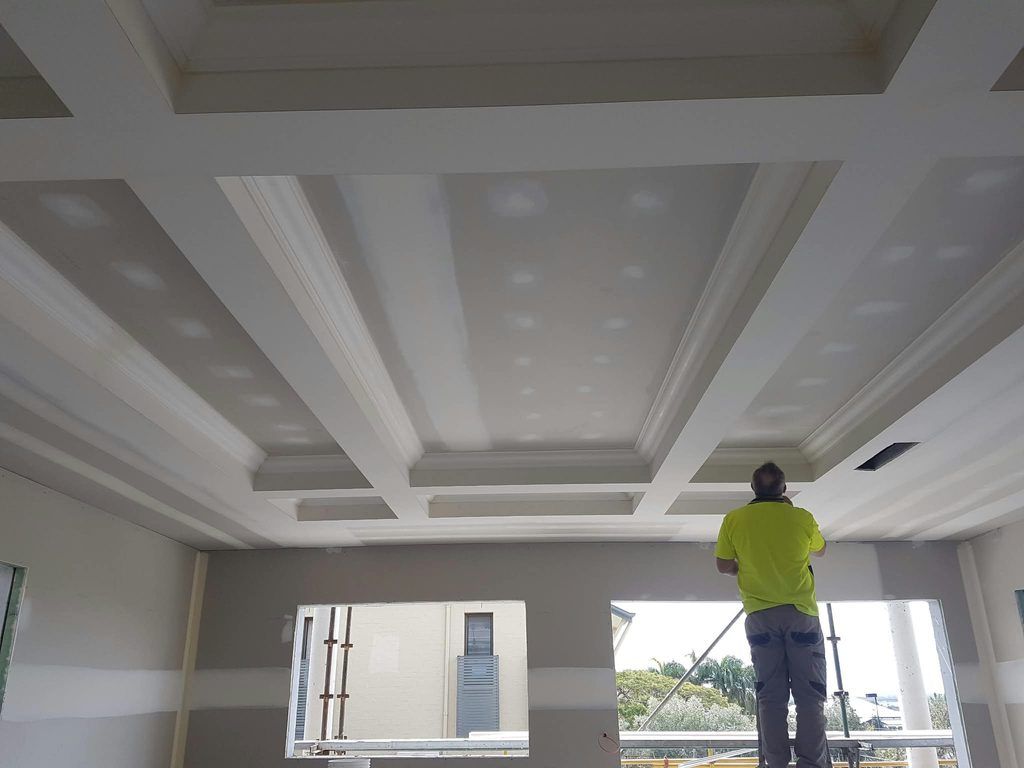
Brisbane Plastering offers ceiling repairs and plaster and plasterboard repairs across its Brisbane service areas. For a Teneriffe property, describe the crack's position and width, whether it has changed and whether any staining is present when you request a quote. The illustrative photograph shows ceiling lining under installation, not a verified Teneriffe repair.