
What the bulkhead is being asked to do
A bulkhead usually exists for a reason: to carry or conceal ductwork, a beam, plumbing or wiring, or to mark a change in how a space is used. Knowing the reason settles the shape, because a bulkhead built only to look deliberate will cost the room height without returning anything.
In renovations, the same question decides whether a bulkhead is needed at all. Sometimes the services can be routed differently and the ceiling stays flat.
Height and clearance come before appearance
The duct, pipe or beam being concealed sets the minimum depth, and the room's usable height sets the limit. A bulkhead that is a little too deep is felt every day, long after the paint has dried.
Existing framing matters too. Ceiling joists and trusses carry their own depth and sometimes their own bracing, so the run of the bulkhead should be checked against what is actually above it rather than assumed from a drawing.
Framing, lining and curved sections
Bulkheads are framed to suit the load and the run, then lined. Sheet type, thickness and fixing method are chosen for the location and the finish expected, and joints are planned where they will be least visible.
Curved bulkheads need a different approach to both framing and lining, and the radius should be settled before materials are ordered. Where a curve meets a straight ceiling, the junction detail determines whether the transition reads as intentional.
Finishing the junction with the existing ceiling
A new bulkhead meets an older ceiling along two lines, and those lines are where movement and light show up first. Backing, joint treatment and a sensible expectation of the finish all matter more here than in the middle of a flat plane.
Downlight cutouts should be set after the lining is in place, and any insulation disturbed during the work should be restored. Where the bulkhead passes a window, side light will reveal the junction, so discuss the finish level before painting.
Discuss a Toowong bulkhead scope
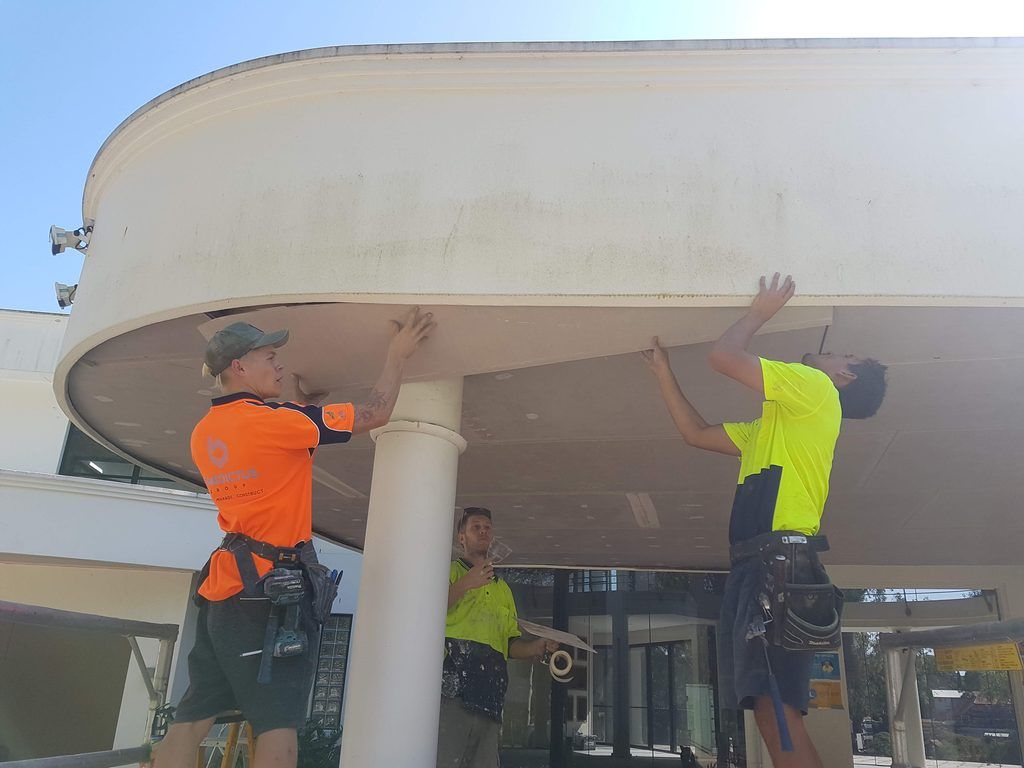
Brisbane Plastering offers plasterboard installation and commercial plastering across its Brisbane service areas. For a Toowong property, describe what the bulkhead must conceal, the ceiling heights you want to keep and which rooms are affected when you request a quote. The illustrative photograph shows lining being installed beneath a bulkhead, not a verified Toowong construction.